
What Happened This Week?
Majorana 1 and a look into the future of quantum computing

Weekly Brief
Satya Nadella unveiled Majorana 1, Microsoft’s first quantum chip, on the Dwarkesh Podcast, highlighting the future of an emerging industry with potential applications spanning drug discovery, financial modeling, materials science, and especially artificial intelligence. I did a deep dive into quantum computing, a realm I have always been interested in but never completely understood. Therefore, instead of releasing one last week, I decided to spend my sweet time writing this substack. The convergence of quantum computing and AI is particularly promising, with the potential to create more powerful and efficient AI systems. Quantum machine learning, quantum optimization, and quantum communication are just a few examples of the exciting possibilities that lie ahead. So without further ado, let’s get into it!
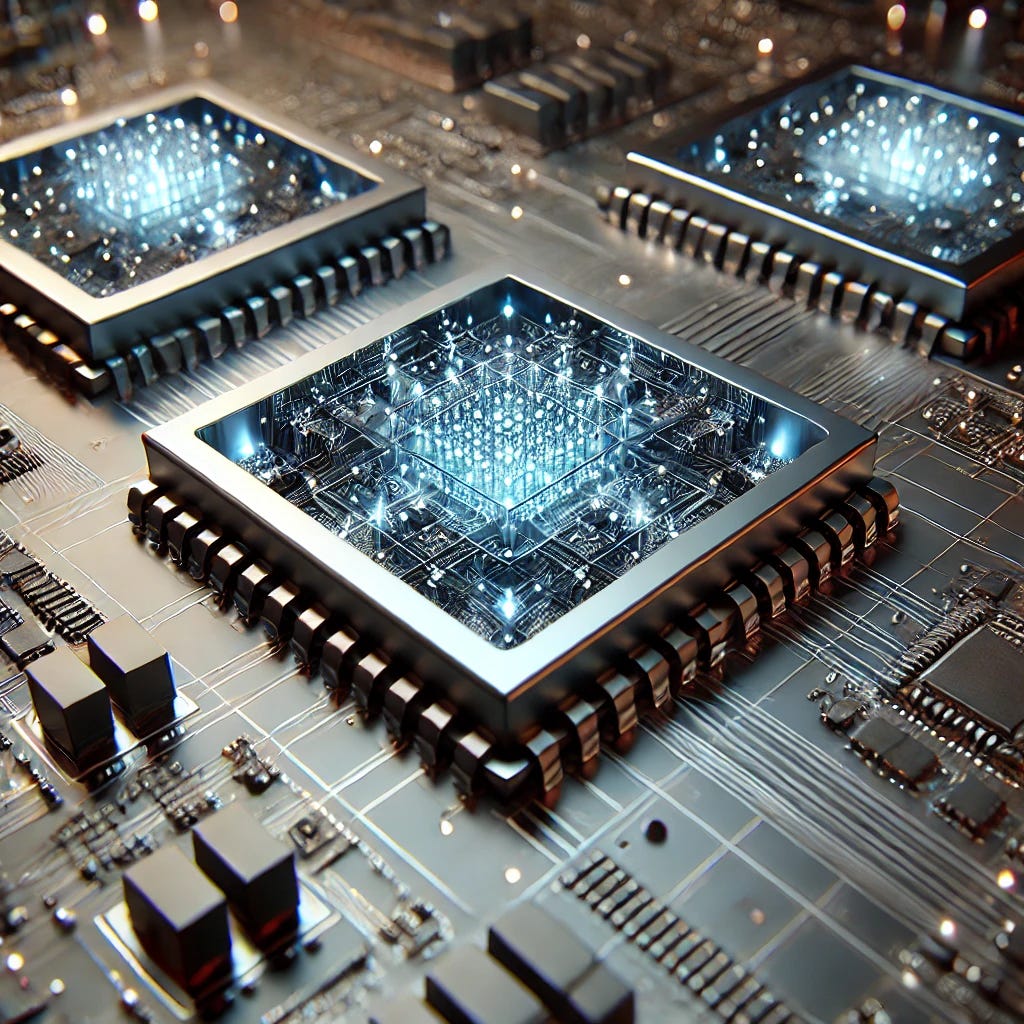
From Bits to Qubits: Exploring the Quantum Realm
In this article, I shall dive into the history of quantum computing, highlighting unique challenges and achievements made in this industry over the last few decades before exploring achievements by IBM, Google and Microsoft, and ending with a future outlook of the industry including its synergistic potential with AI.
What Makes Quantum Computing Unique?
Let’s begin by defining the basic unit of quantum computing, a Qubit and how it differs from classical bits. Unlike classical bits, which can only represent 0 or 1, qubits can exist in a superposition of both states simultaneously. Imagine a coin spinning in the air – it's neither heads nor tails until it lands. Similarly, a qubit can be in a combination of 0 and 1, allowing it to hold and process vastly more information than a classical bit 1. As stated on Microsoft’s website, a qubit “can represent a 0, a 1, or any proportion of 0 and 1 in superposition of both states, with a certain probability of being a 0 and a certain probability of being a 1.”
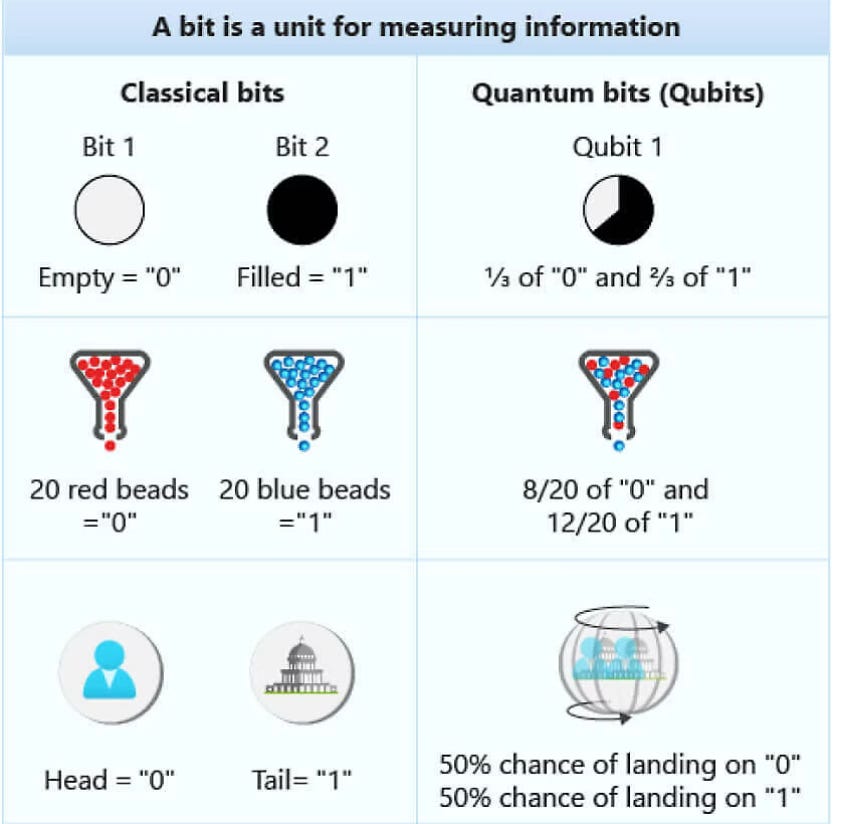
Furthermore, qubits can be entangled, meaning the state of one qubit is directly correlated with the state of another, even if they are physically separated. This interconnectedness allows quantum computers to perform calculations in ways that are impossible for classical computers, opening up new avenues for solving complex problems.
A Journey Through Time: The Genesis of Quantum Computing
Without going too much into the history of quantum physics, most advancements in the realm of quantum computing came began in the late 20th century when scientists began exploring the potential intersection of quantum mechanics and information theory in the 70's. Paul Benioff crystallized these ideas in 1980 when he published a paper claiming the theoretical viability of a quantum computer by proposing a quantum version of a Turing machine, a theoretical model of a computer capable of implementing any algorithm. By showing that such a device could be described using the equations of quantum mechanics, Benioff laid the groundwork for this new field.
The idea gained momentum when the legendary physicist Richard Feynman delivered a keynote speech at the first Physics of Computation Conference in 1981. Feynman argued that simulating the quantum world with classical computers was inherently inefficient. He proposed the concept of a "quantum simulator," a device specifically designed to leverage quantum mechanics for simulating physical phenomena.
David Deutsch introduced the concept of a "universal quantum computer," a theoretical machine capable of simulating any physical process. This built upon the idea of a universal Turing machine, which can simulate any other Turing machine, but with the crucial distinction that Deutsch's quantum computer could simulate quantum systems, something a classical Turing machine could not do.
Milestones and Breakthroughs: Shaping the Quantum Landscape
The 1990s saw a shift from theoretical concepts to practical proofs-of-concepts beginning with Peter Shor’s quantum algorithm that could efficiently factorize large numbers. This algorithm, now known as Shor's algorithm, demonstrated the potential of quantum computers to outperform classical computers in solving specific problems, particularly those related to cryptography.
Lov Grover, a computer scientist at Bell Labs, introduced another groundbreaking algorithm in 1996 for unstructured search. Grover's algorithm offered a quadratic speedup over classical algorithms for searching unsorted databases, highlighting the potential of quantum computers to tackle complex search problems.
These early algorithms, along with the experimental realization of the first quantum logic gate, the building blocks of quantum circuit. They manipulate qubits to perform computations, marking a crucial step towards building practical quantum computers.
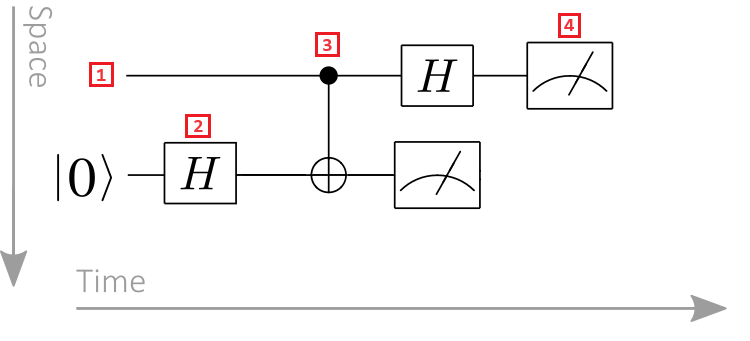
The early 2000s saw further advancements, including the demonstration of a 5-qubit NMR computer at the Technical University of Munich in 2000 and the first execution of Shor's algorithm to factor the number 15 at IBM's Almaden Research Center and Stanford University in 2004.
In 2019, Google claimed to have achieved quantum supremacy, a milestone where a quantum computer outperforms the most powerful classical supercomputers in a specific task. Their Sycamore processor, a 53-qubit superconducting quantum computer, performed a calculation in 200 seconds that would have taken the most powerful supercomputer at the time thousands of years to complete
A Diverse Quantum Landscape: Exploring Different Qubit Technologies
Each type of qubit has its own advantages and disadvantages, and the ideal qubit for a particular application may depend on factors such as coherence time, scalability, and ease of fabrication.
Superconducting qubits: Most widely used type of qubit. They are based on superconducting circuits and offer good coherence and scalability. Companies like IBM and Google are heavily invested in this technology.
Trapped-ion qubits: Use individual ions trapped in electromagnetic fields. They offer long coherence times and high-fidelity operations, making them suitable for complex quantum algorithms. IonQ is a leading company in this area.
Photonic qubits: Use photons to encode quantum information. They offer advantages in terms of scalability and integration with existing optical technologies. Xanadu AI is a prominent player in photonic quantum computing.
Neutral atom qubits: Use neutral atoms trapped in optical lattices. They offer long coherence times and potential for scalability. ColdQuanta is a company specializing in this technology.
There are more in this a non-exhaustive list of the most well-known qubits
Quantum dot qubits(based on the electronic spin states of electrons confined in semiconductor quantum dots), Topological qubits (based on the topological properties of materials, such as the non-local properties of Majorana fermions), Diamond nitrogen-vacancy (NV) center qubits (based on the electronic spin states of nitrogen-vacancy centers in diamond and are manipulated using microwave and optical fields), Nuclear magnetic resonance (NMR) qubits (based on the nuclear spins of atoms or molecules that are manipulated using radiofrequency pulses in a magnetic field).
Microsoft's Quantum Leap: Taming the Majorana Particle
So what did Microsoft do that was so special? Maintaining the quantum state of qubits is a fundamental challenge since qubits are notoriously susceptible to noise and environmental interference, leading to errors in computation. This "decoherence" is a major obstacle to building reliable and scalable quantum computers.
Microsoft has taken a unique approach to address this challenge by focusing on topological qubits, which leverage the properties of Majorana particles. These quasiparticles, theorized to be their own antiparticles, offer inherent protection against certain types of errors, making them promising candidates for building more stable quantum computers.
Microsoft's breakthrough came with the development of Majorana 1, the world's first quantum chip powered by a topological core architecture. This chip utilizes a new type of material called a topoconductor, which allows for the observation and control of Majorana particles to create more reliable and scalable qubits. This is harnessed to produce a more stable qubit that is fast, small, and can be digitally controlled, without the tradeoffs required by current alternatives.
To achieve this, Microsoft researchers engineered a novel materials stack made of indium arsenide and aluminum, meticulously designed and fabricated atom by atom. This intricate process coaxed Majorana particles into existence, harnessing their unique properties to pave the way for more stable and controllable qubits.
A key innovation in Microsoft's approach is the use of digital switches to control the qubits. These switches couple the ends of a superconducting nanowire to a quantum dot, a tiny semiconductor device that stores electrical charge. By measuring the change in the dot's ability to hold charge, Microsoft researchers can determine the state of the qubit with high precision.
This digital control mechanism simplifies the control process by making it easier to manage large numbers of qubits and enhances the stability of the qubits. Furthermore, this chip is designed to accommodate a million qubits on a single chip, a significant leap towards practical quantum computing. This scalability is crucial for tackling complex problems that require vast computational resources.
The Power of Topological Protection
The inherent stability of topological qubits stems from the concept of topological protection. In essence, the quantum information encoded in these qubits is protected by the topology of the system, making it less susceptible to local disturbances. Imagine a knot tied in a rope – the knot remains intact even if you wiggle or bend the rope. Similarly, the quantum state of a topological qubit is robust against small perturbations, reducing the need for complex error correction. This YouTube video is a good visualization of what I’m talking about.
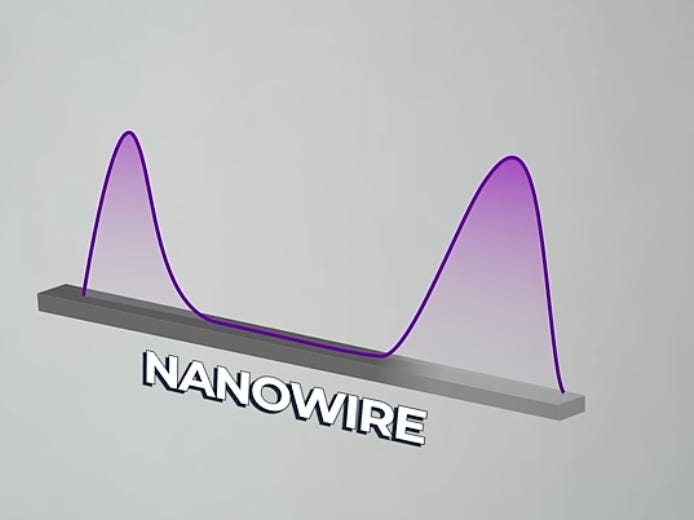
This topological protection could be a game-changer in the quest for fault-tolerant quantum computers. By minimizing the impact of errors, it could simplify the design and operation of large-scale quantum systems, accelerating the development of practical quantum applications.
Challenges on the Quantum Frontier
Despite the remarkable progress in quantum computing, several challenges remain on the path to realizing its full potential.
Noise and Error Rates: Think of it like trying to balance a pencil on its tip – any slight vibration or disturbance will cause it to fall. Similarly, even the smallest interactions with the environment can disrupt the quantum state of a qubit.
Scalability: It's like trying to orchestrate a symphony with millions of instruments – each instrument needs to be perfectly tuned and coordinated to produce the desired harmony.
Hardware Limitations: Imagine trying to perform delicate surgery in a blizzard – the extreme conditions make it incredibly difficult to maintain precision and control.
Quantum Software and Algorithms: It's like trying to write a novel in a language that hasn't been fully invented yet – you need to develop new grammar rules and vocabulary to express your ideas.
Quantum Error Correction (QEC)
One of the key strategies for overcoming the challenge of noise and errors in quantum computing is quantum error correction (QEC). QEC in essence is similar to error correction is classical computers with a slight challenge called the no-cloning theorem. This theorem states that it's impossible to create an exact copy of an unknown quantum state. Therefore unlike traditional error correction methods, which rely on redundancy and copying, cannot be directly applied to quantum systems.
Despite these challenges, researchers are developing innovative QEC codes and techniques that can protect quantum information from errors. These codes typically involve encoding a logical qubit, which represents the actual information, into multiple physical qubits. By measuring the state of these physical qubits, errors can be detected and corrected without directly measuring the logical qubit, which would destroy its quantum state.
Closing thoughts
While challenges remain, the progress made in recent years is remarkable. Companies like IBM, Google, and Microsoft are leading the charge, developing innovative hardware and software solutions that push the boundaries of quantum computing.
The future of quantum computing is bright, with potential applications spanning drug discovery, financial modeling, materials science, artificial intelligence, and beyond. The convergence of quantum computing and AI is particularly promising, with the potential to create more powerful and efficient AI systems. Quantum machine learning, quantum optimization, and quantum communication are just a few examples of the exciting possibilities that lie ahead.
A new meta-prompting template
One of my favorite metaprompting techniques is called collaboration with experts. Similar to the tree of thoughts, I guide the LLM to collaborate with multiple experts before giving me a solution. I personally love using this template with Claude 3.7 and Gemini Flash Thinking 2.0, check it out:
**Collaborate with Experts (CE)**

- **Tag:** `[CE]`
- **System Prompt:** `You are a Meta-Expert. Identify relevant expert domains, delegate tasks, cross-verify responses, and synthesize a collaborative answer.`
- **Metaprompt Template:**

    `[CE]
    PROMPT: {user_prompt}

    SYSTEM:
    1. **Experts & Tasks:** Identify necessary expert domains and break down the prompt into sub-tasks.
    2. **Instructions:** Formulate *specific* requests for each expert. (e.g., "Historian: Provide context on...")
    3. **Consult:** Consult each expert independently.
    4. **Verify:** Check expert responses for consistency and relevance.
    5. **Cross-Verify & Resolve:** Compare responses, address conflicts, identify nuances.
    6. **Synthesize:** Integrate expert insights into a cohesive, final answer.

    FINAL ANSWER (Collaborative):`